Loading blog posts...
April 16, 2026 • 3 min read
When we think of the artificial intelligence boom, companies like Nvidia and AMD usually steal the spotlight. But underneath their cutting-edge designs lies the true engine of the global tech economy: Taiwan Semiconductor Manufacturing Company (TSM). As the world's leading pure-play semiconductor foundry, TSMC manufactures the physical chips that power everything from your smartphone to massive AI data centers.
Their latest 20-F annual report for fiscal year 2025 provides a clear window into how the insatiable demand for AI is fueling spectacular growth. Let's unpack the numbers.
TSMC's financial performance in 2025 was nothing short of remarkable. The company's net revenue surged by 31.6% year-over-year, reaching an impressive NT$3.81 trillion (approximately US$121.4 billion). This growth was driven by higher wafer shipments and an increased average selling price, thanks to a richer mix of advanced, high-value chips.
This top-line growth translated directly into enhanced profitability. Gross margin expanded to 59.9%, up from 56.1% in 2024, a significant feat attributed to higher factory utilization and cost improvements. This ultimately led to a net income of NT$1.70 trillion, a staggering 46.5% increase from the previous year.
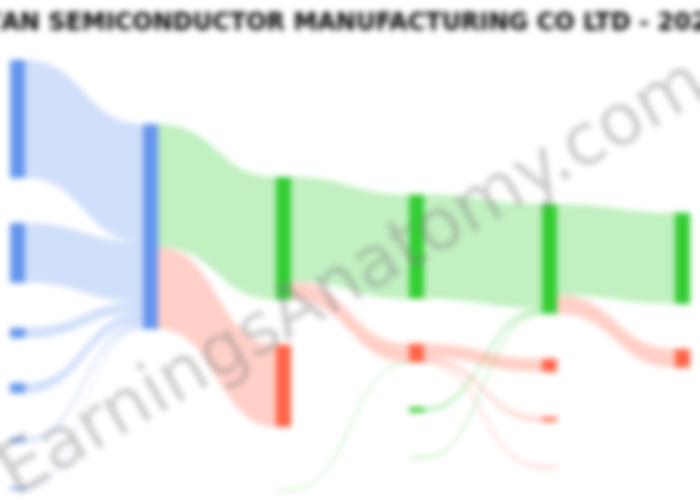
The following flow diagram provides a visual breakdown of how TSMC's revenue streams translate into profit after accounting for various costs.
The most telling trend in the filing is the dominance of the High Performance Computing (HPC) platform, which includes chips for AI data centers, servers, and high-end PCs. Revenue from HPC skyrocketed to become 58% of TSMC's total revenue in 2025, up from 51% in 2024.
In contrast, the Smartphone segment, while still growing in absolute NT dollars, saw its share of revenue shrink from 35% to 29%. This shift clearly illustrates that while smartphones remain a crucial market, the explosive growth is now firmly anchored in the AI and HPC sectors. This demand is for the most advanced chips; technologies 7-nanometer and smaller now account for a massive 74% of total wafer revenue, up from 69% in 2024.
To meet this surging demand and maintain its technological lead, TSMC is investing at an unprecedented scale. The company's capital expenditures (capex) reached NT$1.27 trillion (approx. US$40.9 billion) in 2025.
Looking ahead, the company is doubling down on its strategy. TSMC projects its 2026 capex will be between US$52 billion and US$56 billion. These funds are primarily earmarked for expanding manufacturing capacity for its cutting-edge 2-nanometer and 3-nanometer nodes—the very technologies required for the next generation of AI and HPC applications.
In conclusion, TSMC's 2025 results paint a vivid picture of a company at the heart of the AI revolution. The surge in HPC revenue and the massive forward-looking investments underscore a deep confidence in sustained, long-term growth. For investors and tech enthusiasts alike, TSMC's financial health serves as a powerful barometer for the entire semiconductor industry. As long as the world's hunger for more powerful computing continues, the foundry powering it all appears set for a prosperous future.
Last updated: April 16, 2026
Visual breakdowns and margin trends from recent public company SEC filings.
Norwegian Cruise Line Q3 2026: Higher Net Income Masks Weaker Operations
Oct 30, 2026
Read
Citizens Financial Group (CFG) Q3 2026: NII Expansion & Margin Growth
Oct 30, 2026
Read
Chubb Limited Q3 2026 10-Q Analysis: 84.1% Combined Ratio & $1.79B Investment Income
Oct 30, 2026
Read
MGM Resorts Q3 2026: Operating Profit Rebounds as Adjusted EBITDA Falls 20.4%
Oct 30, 2026
Read