Loading blog posts...
February 26, 2026 • 3 min read
NVIDIA has decisively transformed from its roots in gaming graphics into a data center AI infrastructure powerhouse. To see exactly how this transformation is translating into financial reality, we can unpack the numbers from their latest annual 10-K filing for the fiscal year ended January 25, 2026. Digging into the income statement gives us a clear view of the mechanics behind their growth and what it means for the broader tech landscape.
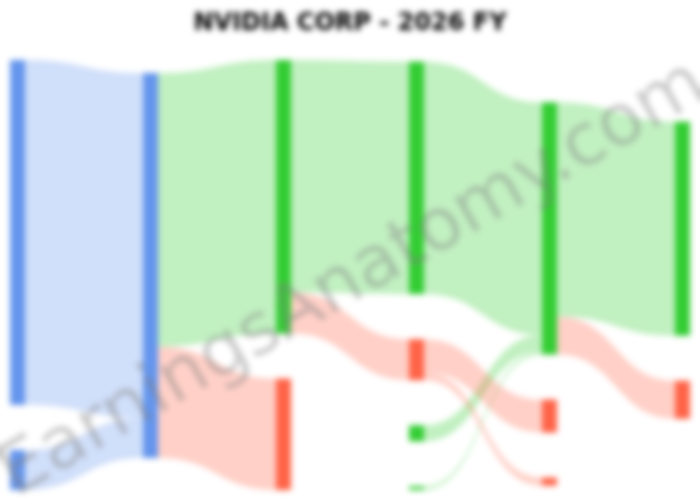
NVIDIA’s financial results for fiscal 2026 operate on a staggering scale. The company reported total revenue of $215.9 billion, a massive 65% increase from the $130.5 billion generated just a year ago.
What is particularly notable is how efficiently this top-line growth flows to the bottom line. Net income also surged 65% year-over-year to reach $120.1 billion. This means NVIDIA is retaining over 55 cents of net profit for every single dollar of revenue it brings in—an extraordinary level of profitability for a hardware-centric business. Meanwhile, the company's gross margin remained remarkably high at 71.1%, though it represented a slight decrease from the 75.0% recorded in the prior year. Operating expenses rose 41% to $23.1 billion, driven largely by increased compensation, employee growth, and infrastructure costs.
The company’s growth is anchored by its two core segments:
With $102.7 billion in net cash provided by operating activities, NVIDIA has deployed its capital aggressively. The company heavily rewarded shareholders, executing $40.1 billion in share repurchases and paying out nearly $1 billion in dividends.
The cash flow statement also highlights significant strategic cash deployments. Notably, under cash flows from investing activities, the filing lists a separate $13.0 billion cash outflow for "Groq, Inc." This massive cash deployment was recorded entirely distinct from the company's $1.5 billion in net cash used for acquisitions and its $17.5 billion in purchases of non-marketable equity securities.
Despite the record-breaking financial performance, NVIDIA faces complex regulatory and competitive challenges. The filing details how the company's worldwide operations are subject to a shifting and expanding series of export control restrictions. Specifically, the U.S. government has imposed controls impacting NVIDIA's ability to export products to customers in D:1, D:4, and D:5 countries, alongside other worldwide restrictions.
Furthermore, the competitive landscape is intensifying. NVIDIA is not just competing with traditional semiconductor suppliers; it is increasingly facing off against its own massive customers. The filing explicitly names major players like Amazon, Huawei, and Microsoft as competitors that incorporate hardware and software for CPUs as part of their own internal solutions and platforms.
As the demand for AI infrastructure continues to reshape the global economy, NVIDIA's FY2026 results confirm its position at the center of the industry. However, defending this highly lucrative territory will require navigating strict geopolitical export frameworks and holding off deep-pocketed tech giants racing toward internal silicon independence.
Last updated: February 26, 2026
Explore prior quarterly filings, historical revenue breakdowns, and earnings trends.
NVIDIA Q2 FY2027: Revenue Doubles as Net Margin Reaches 62%
Aug 26, 2026
Read
Unpacking Nvidia's Q1 FY27 10-Q: $81.6B Revenue and the AI Economy
May 20, 2026
Read
NVIDIA Q3 FY26 Results: AI Dominance Drives $57B Revenue Amid Geographic Shifts
Nov 20, 2025
Read
NVIDIA Q2 FY2026 Earnings: AI Boom Fuels Record $46.7B Revenue
Aug 27, 2025
Read