Loading blog posts...
February 12, 2026 • 4 min read
MGM Resorts International (NYSE: MGM) is a titan in the hospitality and entertainment industry. While they are best known for iconic Las Vegas Strip properties like the Bellagio, MGM Grand, and Mandalay Bay, their footprint extends to regional U.S. casinos, a massive presence in Macau (China), and a rapidly growing digital betting arm.
We’ve dug into their latest 10-K filing for the fiscal year ended December 31, 2025, to see how the company is performing. The top-line numbers show growth, but a look down the income statement reveals a complex story of shifting revenue drivers and significant structural costs.
MGM reported consolidated net revenues of $17.54 billion, a modest increase from $17.24 billion in 2024. However, despite the top-line growth, profitability took a hit. Net income attributable to MGM Resorts International fell significantly to $206 million ($0.76 per diluted share), down from $747 million ($2.40 per share) the previous year.
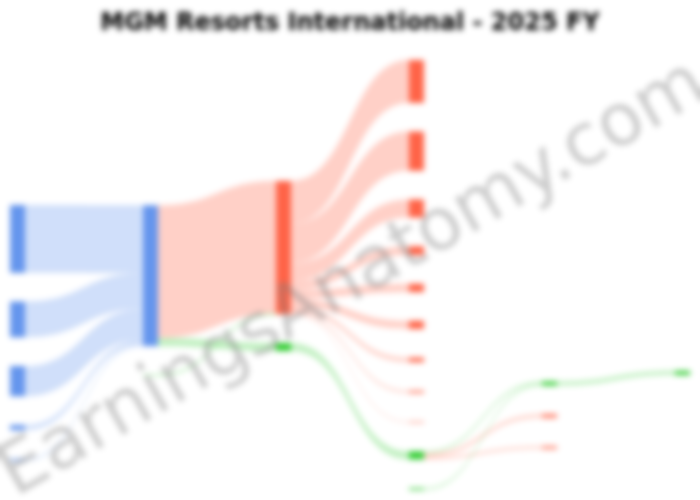
To visualize how the money flows from the casino floor and hotel rooms down to the bottom line, take a look at this breakdown:
The 2025 fiscal year highlights a divergence between MGM's two most critical markets.
Las Vegas Strip Resorts: The domestic crown jewel faced headwinds. Net revenues on the Strip decreased to $8.44 billion (from $8.82 billion in 2024). This decline was driven largely by a 9% drop in rooms revenue. The company cited a decrease in RevPAR (Revenue Per Available Room) to $229 and disruptions from room remodeling at the MGM Grand Las Vegas. It appears the post-pandemic travel surge in Vegas has normalized, or at least paused for renovations.
MGM China: Conversely, operations in Macau are booming. Net revenues surged 11% to $4.46 billion. The recovery in this region continues to accelerate, with casino revenues jumping significantly due to increased "drop" (the amount of money wagered) on main floor table games. While Vegas cooled off, Macau heated up, proving the value of MGM's geographic diversification.
MGM Digital, which includes their online betting ventures like LeoVegas and the BetMGM partnership, saw net revenues climb 19% to $654 million. While the segment is still operating at a loss (Adjusted EBITDAR of -$90 million), the revenue growth suggests their investment in the digital future is gaining traction.
Regional Operations (properties like MGM National Harbor and Borgata) remained steady, generating $3.77 billion, a slight 1% increase year-over-year.
Why did net income drop so sharply if revenue was up? There are two primary culprits buried in the expenses:
Despite the drop in GAAP net income, MGM continues to aggressively return capital to shareholders. The company repurchased approximately 37.5 million shares for nearly $1.23 billion during the year. This reduces the share count, which helps support Earnings Per Share (EPS), even when absolute net income falls.
MGM Resorts is currently a company in transition. It is managing a stabilization in Las Vegas through renovations while riding a wave of growth in Macau and investing heavily in digital expansion. While the heavy rent burden and impairment charges weighed on the 2025 bottom line, the core gaming and hospitality engines generated over $17.5 billion in revenue, giving them plenty of ammunition to weather renovations and continue buying back stock.
Last updated: February 23, 2026
Explore prior quarterly filings, historical revenue breakdowns, and earnings trends.