Loading blog posts...
February 5, 2026 • 4 min read
Amcor plc, a global leader in developing and producing responsible packaging for food, beverage, pharmaceutical, medical, home, and personal-care products, has undergone a fundamental transformation. Following its merger with Berry Global Group, Inc., completed in April 2025, the company’s financial profile has shifted dramatically. By digging into their latest 10-Q filing for the quarter ended December 31, 2025, we can see exactly how this consolidation is reshaping the income statement and what it means for the company's future.
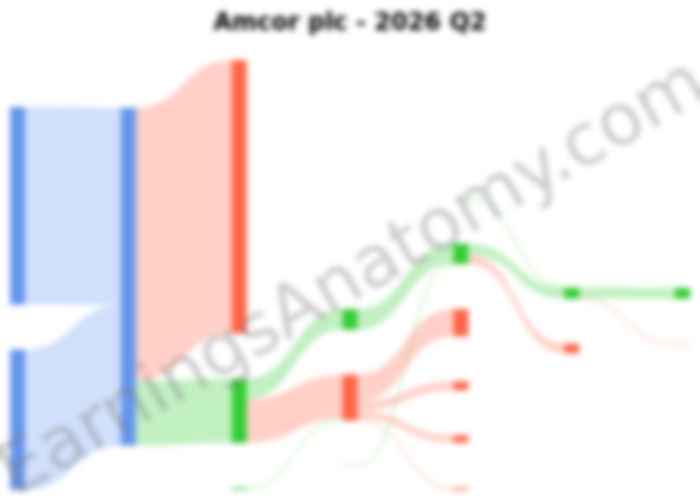
To grasp the scale of Amcor's expanded operations, the diagram below illustrates how revenue flows through costs and expenses to the bottom line for the most recent quarter:
The most immediate takeaway from the filing is the sheer scale of top-line growth. Net sales for the quarter reached $5.45 billion, a massive 68% increase compared to $3.24 billion in the same period last year. This surge is not due to standard organic growth but is the direct result of integrating Berry Global’s operations.
This acquisition has significantly rebalanced Amcor's portfolio, which was historically weighted heavily toward Flexible Packaging (products like pouches, wrappers, and bags).
This shift suggests Amcor is now a more diversified player, with a much heavier reliance on rigid containers—such as bottles, jars, and clamshells—balancing its traditional strength in flexibles.
While the revenue numbers are impressive, the bottom line tells a more complex story of "digestive" pains. Despite the 68% jump in sales, Net Income attributable to Amcor plc only increased modestly to $177 million, compared to $163 million a year ago.
Several factors weighed on profitability during the quarter:
Investors noting the share count in the filing—approximately 462 million shares outstanding—should be aware of a significant administrative change. The filing highlights a 1-for-5 reverse stock split that became effective on February 2, 2026.
A reverse split consolidates existing shares into fewer, proportionally more valuable shares. While this doesn't change the total market value of the company, it is a move often used to optimize the share price for institutional investors and manage the stock's liquidity. The financial data in this report has been retroactively adjusted to reflect this new share structure.
Amcor is currently in a transitional phase. The merger has positioned it as a dominant force with expanded capabilities across both flexible and rigid packaging substrates. However, the Risk Factors section of the filing explicitly warns of "risks arising from the integration" and the potential that "anticipated benefits of the Transaction may not be realized."
Moving forward, the company faces the dual challenge of managing its significant debt load while executing on the synergies promised by the merger. In an industry defined by significant competition and fluctuating raw material costs, Amcor’s ability to streamline its newly expanded operations will be the key metric to watch.
Last updated: February 5, 2026
Explore prior quarterly filings, historical revenue breakdowns, and earnings trends.