Loading blog posts...
May 7, 2026 • 3 min read
The AES Corporation, a global power generation and utility company, is in the midst of a dual transformation. The first is strategic: an aggressive pivot from fossil fuels toward a future powered by solar, wind, and energy storage. The second is corporate: a landmark $10.7 billion deal to be taken private. A deep dive into the company's first-quarter 2026 financial filing reveals a business hitting its stride, providing a clear picture of what its new private equity owners are set to acquire.
On March 1, 2026, AES announced its agreement to be acquired by Horizon Parent, L.P., a consortium led by infrastructure investors Global Infrastructure Partners (GIP) and EQT. The Q1 results demonstrate the operational momentum behind that valuation.
AES posted a strong start to the year, with total revenue climbing 9% to $3.18 billion from $2.93 billion in the same quarter last year. More impressively, the company's operating margin—what’s left after covering the direct costs of producing and delivering power—jumped 45% to $640 million.
This robust performance flowed directly to the bottom line. Net income attributable to AES shareholders skyrocketed to $487 million, a more than tenfold increase from the $46 million reported in Q1 2025. This translates to diluted earnings per share of $0.68, up from just $0.07 a year ago.
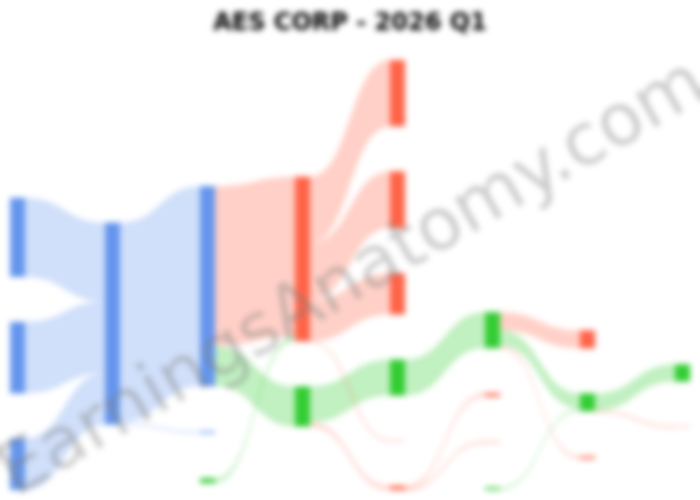
This flow-through from revenue to profit is illustrated in the diagram below, which breaks down the company's income statement for the quarter.
The diagram shows how revenue from AES's main business segments is used to cover costs, with the remainder flowing to profit. The "Eliminations" category represents revenue from transactions between different AES divisions, which is removed to avoid double-counting in the consolidated total.
The growth story is primarily anchored in two of the company's four strategic business units (SBUs):
This performance highlights the success of AES's strategy: using the stable cash flows from its regulated and legacy energy businesses to fund an aggressive expansion into high-growth renewables.
While the operational results are strong, the company's filing also introduces a new set of risks related to the pending take-private transaction. The "Risk Factors" section now details potential hurdles, including the need to secure shareholder and regulatory approvals, the risk of business disruptions during the transition, and restrictions that could temporarily limit AES's ability to pursue other strategic deals.
The strong first-quarter performance provides a solid foundation as AES navigates this major corporate change. For its prospective owners, these results validate the company's growth potential in the energy transition. The key challenge ahead will be to successfully close the deal and continue executing its capital-intensive renewables strategy without losing the current momentum.
Last updated: May 7, 2026
Explore prior quarterly filings, historical revenue breakdowns, and earnings trends.