Loading blog posts...
February 1, 2026 • 3 min read
Air Products & Chemicals, Inc. (APD) is a titan in the industrial gases sector, providing essential elements like hydrogen, nitrogen, and oxygen to industries ranging from refining and manufacturing to electronics and healthcare. While perhaps not a household name, their performance often serves as a bellwether for broader industrial activity. They operate in a consolidated market, competing primarily against giants like Linde and Air Liquide.
Let's unpack the numbers from their latest 10-Q filing for the first quarter of fiscal year 2026 (ended December 31, 2025) to see how the company is navigating the current economic landscape.
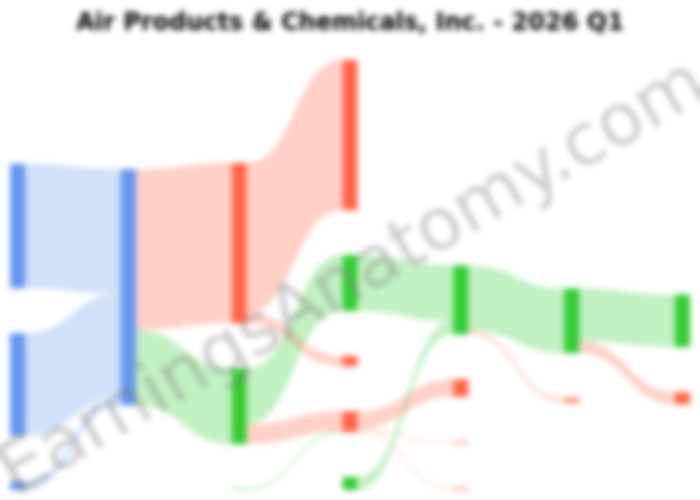
To visualize how revenue flows into the bottom line for the quarter, the diagram below breaks down their income statement:
Air Products reported consolidated sales of $3.1 billion, a 6% increase compared to the same quarter last year. However, a deeper look at the revenue drivers reveals that this growth wasn't generated by selling more gas.
Volumes remained flat (0%) year-over-year. Instead, the revenue bump came from three main sources:
Despite flat volumes, the company improved its profitability. Operating income jumped 14% to $734.5 million, and diluted earnings per share (EPS) rose 10% to $3.04.
A significant contributor to APD's bottom line is "Equity affiliates' income," which totaled $172.2 million (up 14%). For those unfamiliar with the term, this represents APD's share of profits from joint ventures where they have significant influence but not full control—such as their massive gasification projects in Jazan, Saudi Arabia. This income stream is crucial, often accounting for a substantial portion of their pre-tax profits.
Comparing the expense lines between this year and last reveals a shift in corporate focus.
This suggests the company has moved past the immediate defense against activist investors and is now executing on internal restructuring. The filing details a Global Cost Reduction Plan, involving severance and other cost-cutting measures, and "Project Exit Costs" related to divesting certain non-core assets.
The filing highlights continued heavy investment in the NEOM Green Hydrogen Project (NGHC), a massive joint venture in Saudi Arabia. APD’s balance sheet reflects this commitment, but also the complexity of financing such mega-projects. The company also added a new risk factor regarding the "sale of common stock," noting that future equity sales could cause stock price volatility, a standard but noteworthy caution for investors monitoring capital allocation.
In summary, Air Products delivered a solid quarter by effectively managing costs and leveraging currency fluctuations, despite a stagnant volume environment. The transition from activism defense costs to restructuring charges indicates a management team focused on streamlining operations to maintain margins in a flat-demand environment.
Last updated: February 1, 2026
Explore prior quarterly filings, historical revenue breakdowns, and earnings trends.