Loading blog posts...
February 21, 2026 • 3 min read
Abbott Laboratories is a diversified healthcare titan, with a portfolio spanning everything from baby formula and branded generic medicines to cutting-edge pacemakers and diagnostic testing. To understand how the company is navigating the current market and where its true growth drivers lie, let's unpack the numbers from their latest 10-K filing and dig into the income statement.
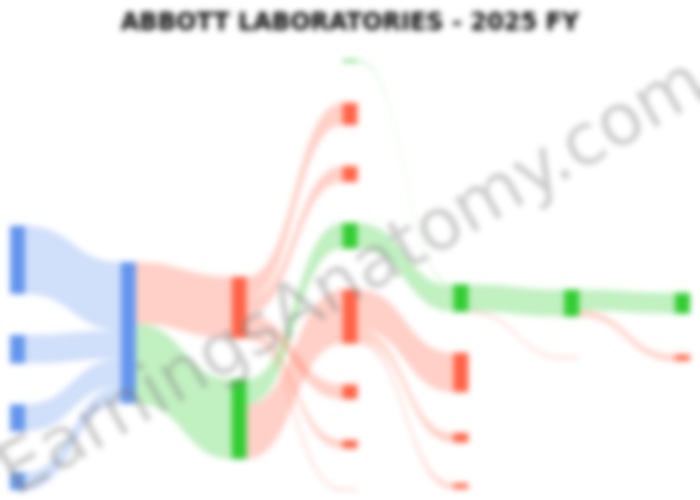
At first glance, Abbott's bottom line looks like it took a severe hit. Net earnings for 2025 came in at $6.5 billion, a dramatic drop from the $13.4 billion reported in 2024. Did the underlying business stumble? Far from it.
The discrepancy is an accounting illusion driven by taxes. In 2024, Abbott recorded a massive $6.4 billion tax benefit (largely tied to deferred foreign taxes) that temporarily hyper-inflated its net income. If we look higher up the income statement at Earnings Before Taxes, the real operational trend is highly positive: Abbott actually grew its pre-tax earnings from $7.0 billion in 2024 to $8.5 billion in 2025. Total net sales also expanded by a healthy 5.7%, reaching $44.3 billion.
Abbott operates four main business segments, but right now, Medical Devices is the undeniable star of the show. The division generated $21.4 billion in revenue—nearly half of the company's total sales—posting an impressive 12.6% year-over-year growth rate.
Within this segment, Diabetes Care is an absolute juggernaut. Driven by the massive popularity of continuous glucose monitors (wearable sensors that track blood sugar without finger pricks), this sub-segment brought in $8.0 billion on its own, soaring 17.5% from the prior year. Abbott’s high-tech cardiac interventions, including Structural Heart and Electrophysiology products, also posted stellar double-digit growth.
On the flip side, Abbott's Diagnostic Products division is still normalizing from its pandemic-era highs. Total diagnostic sales fell 4.3% to $8.9 billion. This drag was primarily driven by an 18.1% drop in Rapid Diagnostics, reflecting the ongoing global decline in demand for mass COVID-19 testing. Fortunately, steady performance in their traditional Core Laboratory diagnostics helped cushion the overall segment's decline.
Elsewhere in the portfolio, Nutritional Products (which includes adult and pediatric formulas like Ensure and Similac) remained essentially flat at $8.5 billion. Meanwhile, Established Pharmaceutical Products—which focuses on selling trusted, branded generic drugs in emerging markets—grew a respectable 6.6% to reach $5.5 billion.
Looking ahead, Abbott isn't just relying on organic growth. Buried in the risk factors of the filing, management notes that the company will incur additional debt in connection with a planned Exact Sciences acquisition. This signals a bold strategic push to capture more of the lucrative cancer screening and molecular diagnostics market, a space where early detection technologies are highly prized.
Ultimately, Abbott's 2025 income statement paints a picture of a successful operational pivot. As the massive windfalls of pandemic-era testing fade into the rearview mirror, Abbott has seamlessly passed the growth baton to its high-tech Medical Devices division. It is a textbook example of how a highly diversified healthcare portfolio can absorb the shock of a declining segment while continuing to drive overall corporate growth.
Last updated: February 21, 2026
Explore prior quarterly filings, historical revenue breakdowns, and earnings trends.
Abbott Q2 2026: Exact Sciences Boosts Sales as Acquisition Costs Pressure Profit
Jul 30, 2026
Read
Abbott Q1 2026: Exact Sciences Acquisition & Earnings Impact
Apr 30, 2026
Read
Abbott Labs Q3 2025 Earnings: Medical Devices Surge, Diagnostics Dip
Oct 30, 2025
Read
Abbott Labs Q2 2025: Medical Devices Drive 37% Profit Surge
Jul 31, 2025
Read