Loading blog posts...
October 29, 2026 • 3 min read
Garmin’s third-quarter income statement shows profit growing much faster than sales—but tariff refunds explain part of the improvement. Digging into its latest 10-Q helps separate stronger business performance from these benefits. The GPS-enabled wearables, navigation and electronics maker reported $1.99 billion in revenue, up 12%, and $541.7 million in net income, up 35%, for the quarter ended September 26, 2026.
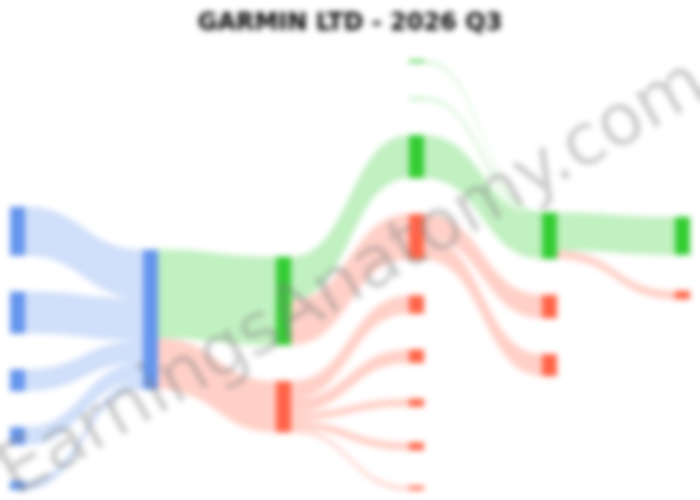
Garmin’s operating income rose 34% to $611.6 million, lifting its operating margin—the share of sales remaining after product costs and operating expenses—to 30.8%, from 25.8% a year earlier.
The quarterly revenue-to-profit breakdown illustrates that conversion:
Gross profit increased 20% to $1.26 billion as gross margin reached 63.3%, versus 59.1%. Meanwhile, operating expenses rose a more modest 10% to $646.1 million, including $312.9 million of research and development spending.
The important qualification: Garmin received approximately $33 million in refunds of previously paid tariffs, adding about 1.6 percentage points to gross margin. Mechanically subtracting those refunds, with everything else unchanged, would leave operating income near $578.6 million—still approximately 27% above last year. That is an analytical comparison, not a company-reported adjusted metric.
Lower product costs and a favorable sales mix also supported margins. Revenue increased faster than unit sales, which grew approximately 9%, reflecting shifts in the products and segments sold rather than volume alone.
Garmin’s five businesses delivered notably different results:
Together, fitness and outdoor supplied roughly 65% of revenue and 76% of operating income. Outdoor generated slightly more operating profit than fitness despite having substantially lower sales—a useful illustration of why revenue size alone does not determine a segment’s earnings contribution.
Diluted earnings per share increased to $2.80 from $2.08. A lower effective tax rate—18.1%, versus 21.2%—also helped, primarily reflecting expected U.S. deductions under tax legislation enacted in 2025. Total nonoperating income actually declined, so it was not the driver of earnings growth.
Cash generation provides additional support: first-nine-month operating cash flow rose 24% to $1.33 billion. However, inventories reached $2.25 billion, up 27% from year-end, tying up more capital.
The takeaway is strong underlying profitability, amplified by tariff refunds and lower taxes. Garmin’s diversified electronics businesses provide multiple earnings sources, but management specifically warns that memory-chip supply constraints and higher costs are expected to pressure future gross margins. Sustaining the current margin gains—not simply expanding sales—is the key issue to watch.
Last updated: October 29, 2026
Explore prior quarterly filings, historical revenue breakdowns, and earnings trends.