Loading blog posts...
May 4, 2026 • 3 min read
Berkshire Hathaway, the sprawling conglomerate managing everything from auto insurance to railroads and energy grids, recently released its first-quarter numbers for 2026. As is often the case with the Omaha-based giant, parsing through their latest 10-Q filing requires a look beyond the headline figures to understand the real performance of its diverse collection of businesses. Let's dig into the Q1 results to see how the company's core operations are faring.
At first glance, Berkshire's net earnings more than doubled to $10.1 billion, up from $4.6 billion in the same quarter last year. However, this jump is primarily due to fluctuations in the value of its massive stock portfolio. The company reported after-tax investment losses of $1.2 billion this quarter, which, while substantial, were significantly smaller than the $5.0 billion in losses recorded in Q1 2025. This volatility is why the company consistently advises investors to focus on operating earnings, which offer a clearer view of the health of its underlying businesses.
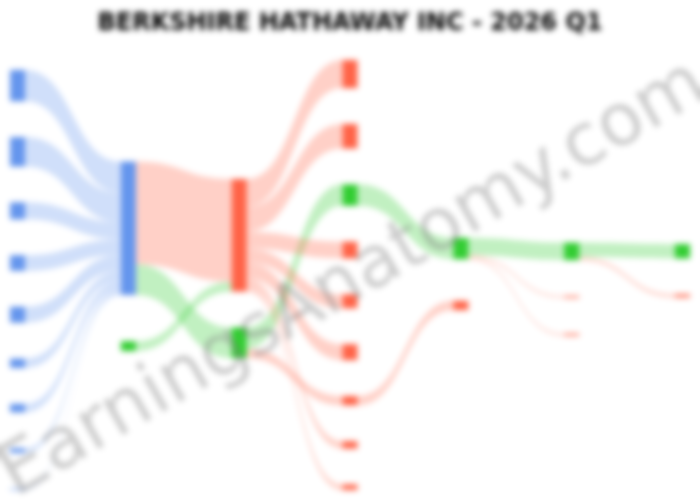
To better understand how Berkshire generates and spends its money, the flow of its revenues and costs for the first quarter of 2026 is illustrated below.
Berkshire's insurance division, the cornerstone of the company, posted a strong quarter with after-tax underwriting earnings of $1.7 billion, a significant increase from $1.3 billion last year. The primary driver was a fortunate lack of major catastrophe events, which cost the company $860 million in the same period of 2025.
The industrial backbone of Berkshire delivered solid results. BNSF Railway saw its after-tax earnings climb 13.4% to nearly $1.4 billion. The railroad benefited from a 2.2% increase in freight volumes and higher revenue per car, reflecting improved operating efficiencies and strong demand for agricultural and energy products.
Berkshire Hathaway Energy (BHE) reported a modest 1.5% increase in earnings to $1.1 billion. Strong performance from its natural gas pipeline businesses offset lower earnings from its U.S. utilities, which faced higher operating expenses related to wildfire prevention and general maintenance.
This diverse group of businesses, which includes everything from industrial manufacturers like Precision Castparts to retailers like See's Candies and Dairy Queen, saw its collective earnings rise by 4.5% to $3.2 billion. The results, however, were not uniform:
In summary, Berkshire Hathaway's Q1 2026 results paint a picture of resilience. While the headline net earnings were skewed by the volatile stock market, the core operating segments demonstrated solid, if varied, performance. The insurance division benefited from a quiet catastrophe season, and the industrial giants BNSF and BHE continued their steady contribution, showcasing the strength and stability of Berkshire's diversified business model.
Last updated: May 4, 2026