Loading blog posts...
March 8, 2026 • 3 min read
Align Technology is the pioneer behind Invisalign, transforming the orthodontics industry with its clear alternative to traditional metal braces. By connecting patients and dentists through digital manufacturing, they have built a massive global ecosystem. However, straightening teeth is often a discretionary expense, tying their financial performance to consumer spending.
Let's unpack the core data from their latest 10-K filing to see how this dental giant managed revenue growth, pricing power, and profitability over the course of the year.
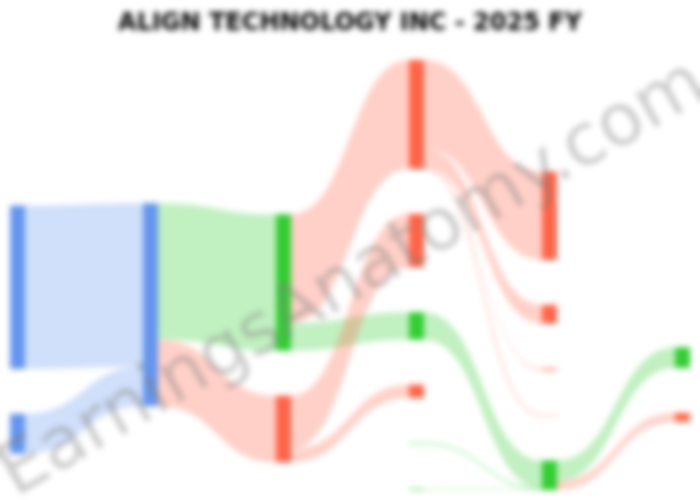
In 2025, Align Technology’s total net revenues nudged up 0.9% to reach $4.03 billion. The company operates through two main channels: the flagship Clear Aligner segment (which includes Invisalign) and the Systems and Services segment, which houses their iTero intraoral scanners and exocad CAD/CAM software used to take 3D digital dental impressions.
The Clear Aligner segment brought in $3.25 billion, a minute 0.5% increase from 2024. A closer look reveals a notable split between volume and price. Total case volume actually grew by a solid 4.7%, with Align shipping over 2.61 million clear aligner cases globally. However, the average revenue per case dropped 3.9%, sliding from $1,295 to $1,245. This indicates that while more patients are starting treatment, Align is navigating pricing pressures—likely leaning on promotional discounts, geographic mix shifts, or increased uptake of lower-priced, "non-comprehensive" packages designed for milder dental corrections.
Meanwhile, the Systems and Services segment offered a bit more momentum, climbing 2.7% year-over-year to $789.6 million. This shows that despite broader economic headwinds, dental practices are continuing to invest in the digital clinic infrastructure required to scan and map patient teeth.
While Align is moving more physical product, the cost to deliver those products is rising. Gross profit landed at $2.71 billion, but the gross margin percentage squeezed down to 67.2% from 70.0% a year prior. This dip was largely driven by a $124.1 million increase in the cost of net revenues, stemming from higher manufacturing and material costs.
Operating expenses remained a heavy load as well. Align invested approximately $1.76 billion into selling, general, and administrative (SG&A) costs—a massive but necessary expenditure to maintain their direct-to-consumer brand dominance—and nearly $370 million in research and development to fuel hardware and software innovations like the new iTero Lumina scanners.
To adapt to tighter margins, Align initiated a 2025 restructuring plan aimed at optimizing its global footprint and right-sizing the workforce. This resulted in $35.4 million in total restructuring charges for the year. Consequently, operating income slipped by roughly 10% to $545.8 million, dragging the operating margin down from 15.2% to 13.5%. The bottom line ultimately settled at $410.4 million in net income, or $5.65 per diluted share.
Align Technology remains the undisputed heavyweight in digital orthodontics, having successfully treated over 22 million patients globally. But the market environment is becoming increasingly fierce. Patients are heavily scrutinizing discretionary and elective healthcare spending, and sophisticated competitors like Envista’s Spark aligners, alongside various direct-to-consumer alternatives, are aggressively hunting for market share. Moving forward, Align’s ability to stabilize its average selling prices while bringing operational costs back in line will be the key narrative for investors to watch.
Last updated: March 8, 2026
Explore prior quarterly filings, historical revenue breakdowns, and earnings trends.