Loading blog posts...
October 29, 2026 • 3 min read
Electric utilities rarely make headlines for rapid top-line expansion, but the ongoing surge in industrial electrification and power-hungry data infrastructure is reshaping the sector's financial dynamics. American Electric Power Company, Inc. (AEP)—one of the largest electric utility holding companies in the United States, operating across 11 states with major operating subsidiaries like AEP Texas, Appalachian Power, and Indiana Michigan Power—delivered a strong third quarter for 2026. Digging into their latest 10-Q filing offers a clear look into how weather patterns, capital investments, and expanding commercial loads are flowing straight through the consolidated income statement.
For the three months ended September 30, 2026, AEP generated $6.83 billion in total revenue, up 13.7% from $6.01 billion in the third quarter of 2025. Consolidated net income reached $1.22 billion, translating to diluted earnings per share (EPS) of $2.16, compared to $1.81 in the prior-year period.
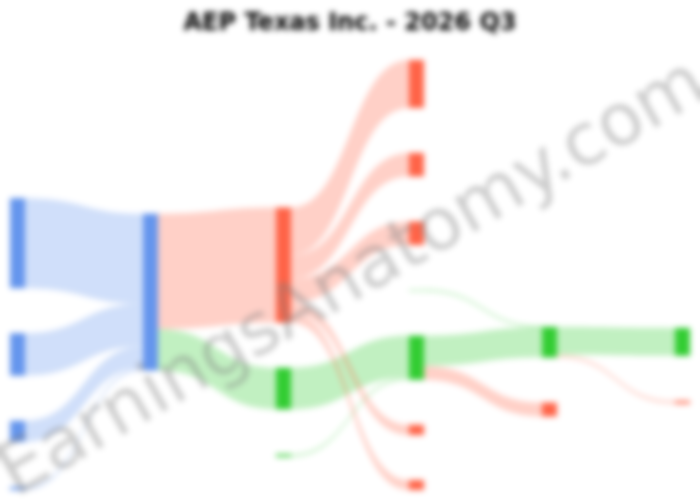
The visual breakdown below traces how revenues from AEP’s core operational segments filtered down through operating expenses and capital charges to net earnings during the quarter:
Beyond the regulated utility segments, the chart includes $134 million in unallocated Other Revenues, which covers miscellaneous non-segment activities and parent-level operations.
On the cost side, utility accounting does not separate a conventional cost of goods sold. Instead, operating expenses totaled $5.02 billion. The largest driver was purchased electricity, fuel, and generation consumables at $2.09 billion, alongside $1.03 billion in other operational expenses and $1.03 billion in depreciation and amortization—reflecting the continuous expansion of the company’s vast physical asset base.
A closer look at the results reveals three central catalysts driving performance:
These tailwinds were partially offset by an increase in financing costs. Quarterly interest expense rose by nearly $100 million year-over-year to $606 million, driven by higher debt balances required to fund massive capital outlay programs.
To prepare for surging power needs, AEP outlined a $100.4 billion capital expenditure program planned between 2027 and 2031, with over $52 billion dedicated to Vertically Integrated Utilities and nearly $24 billion to transmission and distribution networks. During 2026 alone, the company added 1,859 MWs of generation capacity and signed agreements for an additional 5,099 MWs.
Against peers like Duke Energy, Southern Company, and NextEra Energy, AEP faces the classic utility balancing act: funding immense capital expenditures and navigating regulatory rate cases while borrowing costs remain elevated. Yet, as commercial demand from AI data hubs and manufacturing re-shoring continues to accelerate across the Midwest and Texas, AEP’s foundational grid investments position it well to capture long-term load growth.
Last updated: October 29, 2026